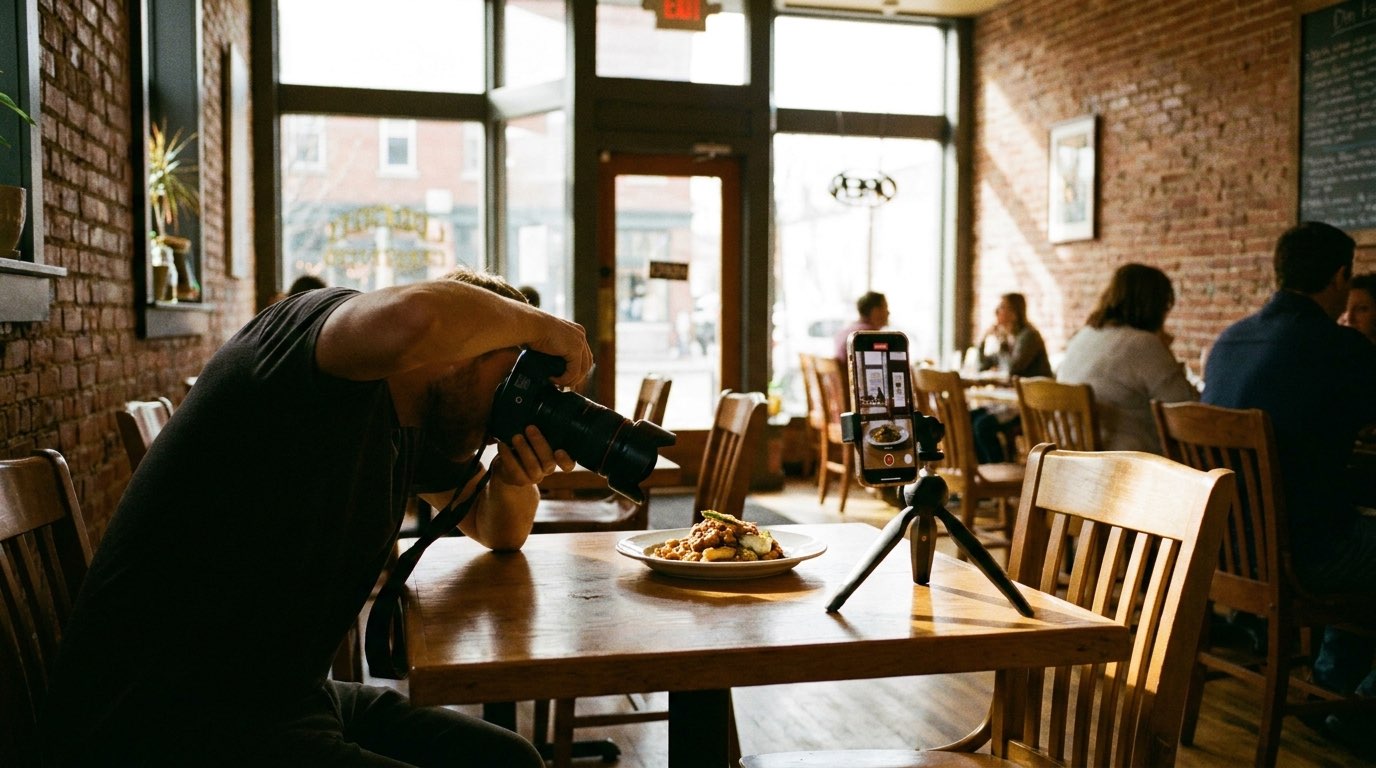
Ask a Cincinnati restaurant owner where their marketing time goes and the answer is almost always the same: nobody has any. Service runs long, someone calls off, a vendor is late, and "post something on Instagram" slides to the bottom of the list for the third week in a row. Meanwhile the phone photos pile up — dim, slightly greasy, shot on the fly between tickets — and none of them look as good as the food actually tastes.
A media day fixes the root problem instead of the symptom. Rather than scrambling for a new photo every time you need to post, you produce a large batch of professional content in one focused session, then draw from it for months. This is one of the most practical things a restaurant can do for its marketing, and it's badly underused in the Cincinnati market.
What a Restaurant Media Day Actually Is
A media day is a scheduled content-production visit. A photo and video team comes to your restaurant, works from an agreed shot list, and captures your food, drinks, space, staff, and atmosphere in a single session — usually two to four hours. You walk away with a library of finished assets: edited photos, short-form videos, and clips sized for every place you show up online.
It is not a single "hire a photographer for one dish" transaction. The entire point is volume and variety captured efficiently. One well-run day can produce more usable content than a year of phone snapshots, and all of it looks like it belongs to the same brand.
Why Restaurants Specifically Need This
Restaurants are visual businesses in a way most local businesses are not. People choose where to eat with their eyes, on their phones, minutes before they decide. Your Instagram grid, your TikTok, and — this one is underrated — the photos on your Google Business Profile are doing a huge amount of the selling before anyone reads a single word.
Three things make media days especially valuable for restaurants:
- Your product changes constantly. New specials, seasonal menus, LTOs, holidays. Fresh visuals keep your feed current instead of recycling the same three photos.
- Short-form video dominates discovery. Reels and TikToks of food being plated, poured, torched, or pulled apart travel far beyond your follower count. You cannot capture those moments well between tickets on a busy line.
- Google rewards active, photo-rich profiles. Restaurants that regularly add quality photos to their Google Business Profile tend to look more appealing in the local pack and on Maps, right where hungry people are searching.
What Gets Captured on the Day
A good shot list covers more than plated food. On a typical restaurant media day, the team captures:
- Hero food photography. Your signature dishes shot clean and styled — the images that anchor your menu, website, and ads.
- Detail and "process" shots. The pour, the pull, the melt, the sizzle. Close-up moments that make food look alive and give you dozens of scroll-stopping frames.
- Short-form video. Vertical clips built for Instagram Reels and TikTok — plating sequences, drink builds, a first bite, the pass during a rush.
- The space and atmosphere. Wide shots of the dining room, the bar, the patio, warm lighting, a full room. This is what tells someone "this is a place I want to be."
- Your people. The chef, the bartender, the owner, the regulars. Faces build trust and give a small restaurant a personality that a chain can't fake.
- Exterior and drone (optional). A clean shot of the storefront so people recognize it from the street, and — where it fits — aerial footage for a patio, a rooftop, or an event.
What You Get Back
The output of a media day is a ready-to-use content library, not a folder of raw files you have to sort through. A typical deliverable set includes:
- A batch of edited, color-corrected hero photos
- A set of short vertical videos and reels, edited and captioned
- Wide and detail shots of your space
- Images sized and formatted for your Google Business Profile
- Web-ready imagery for your homepage, menu, and landing pages
- Optional exterior or drone footage
Delivered well, that library becomes the raw material for weeks of social posts, a website refresh, and your next round of ads — all from one afternoon on site.
How One Shoot Becomes Months of Content
This is where the math turns in your favor. A single dish shot from a few angles, plus a short video of it being made, can become:
- A feed post announcing the item
- A reel of it being plated
- A Google Business Profile photo
- A menu image on your website
- An image for a paid ad
- A story or two along the way
Multiply that across ten or fifteen dishes plus space and team content, and one media day easily produces a quarter's worth of posting material. Instead of asking "what do we post today," you're pulling from a library you already own.
How to Prepare for Your Media Day
The restaurants that get the most out of a shoot do a little prep. Before the day:
- Pick your priority dishes. Focus on signatures, best sellers, and anything new or seasonal. Ten to fifteen strong items beats forty rushed ones.
- Shoot in a calm window. Between lunch and dinner is ideal — the kitchen can plate fresh without fighting a rush, and the dining room is available.
- Clean and stage. Fresh garnishes, wiped plates, a tidy bar, good glassware. The details read on camera.
- Have your team ready. A few minutes with the chef, bartender, or owner makes the human content far better.
- Know where it's going. If you're planning fall specials or a big event, say so — the shot list can get ahead of your calendar.
Where the Content Actually Works
Great content sitting in a folder does nothing. The value shows up when it's deployed across every place a customer meets you:
- Social media. Consistent, high-quality posts and reels on Instagram, TikTok, and Facebook.
- Google Business Profile. A steady stream of fresh photos where local diners are searching and comparing.
- Your website. Real imagery of your food and room instead of stock photos that could be any restaurant anywhere.
- Paid ads. Strong visuals are the single biggest lever on ad performance for restaurants.
- Email and specials. A good photo sells a Friday special better than any subject line.
How Often Should You Do It?
For most restaurants, a quarterly rhythm works well — it keeps the content seasonal and your menu, specials, and decor current. Higher-volume or event-driven spots often shoot more frequently. A smaller restaurant with a stable menu can stretch a single well-planned shoot across several months. The right cadence is whatever keeps you from ever running out of fresh, on-brand content.
What It Costs
Pricing depends on how long the shoot runs, how many finished photos and videos you need, and whether video and drone footage are part of the day. Standalone photo-and-video days commonly range from a few hundred to a couple thousand dollars. Many restaurants fold media days into an ongoing content or marketing package so the shoots — and the posting that follows — happen on a schedule instead of whenever someone remembers. The most expensive option, in practice, is doing nothing and letting blurry phone photos represent your food.
Frequently Asked Questions
What is a restaurant media day?
A scheduled content-production visit where a photo and video team captures your food, drinks, space, and team in one session, producing a library of assets for months of marketing.
How long does it take?
Most run two to four hours on site, ideally during a slow window between service periods so the kitchen and dining room are available.
What do I get?
Edited hero photos, short-form videos and reels, space and detail shots, optional drone footage, and images sized for your Google Business Profile and website.
How often should I do one?
Quarterly is a strong default. Event-heavy restaurants shoot more often; a stable smaller menu can stretch one shoot across several months.
How much does it cost?
It varies with shoot length and deliverables, typically from a few hundred to a couple thousand dollars, and it's often bundled into an ongoing content package. Reach out for a quote.
Want to Book a Media Day for Your Restaurant?
Full Wave Development shoots content, video, and drone footage for local restaurants — then puts it to work across social, Google, your website, and ads. Tell us about your menu and we'll build a shot list and a quote.
Get a Media Day Quote